Bedding guide
How to Choose a Wool Mattress Topper for a Cooler, More Comfortable Bed
A wool mattress topper can bring a softer hand, gentle cushioning, and a more balanced feel to the bed. The right choice depends on more than the fiber itself: fill density, construction, cover fabric, mattress condition, and care instructions all shape how a topper performs over time.
Published October 24, 2026
A well-made bed is an exercise in layering. Sheets bring the first touch of comfort; blankets and duvets create warmth above; a mattress topper works quietly underneath, changing the feel of the surface beneath the sleeper. Wool has a particular appeal here. It is a natural fiber with a springy, slightly yielding character, and its ability to absorb and release moisture can help moderate the feel of a sleep environment.
Still, “wool topper” is not a complete specification. A lofty, generously filled topper may feel quite different from a thin quilted layer. A cotton-covered design will have a different surface hand from one made with a tighter, smoother weave. And because wool products vary in construction and maintenance needs, a little label-reading before purchase can make the difference between a satisfying layer and one that is poorly suited to your bed.
This guide explains how to compare wool mattress toppers with a clear eye: what wool can and cannot do, how thickness and fill affect comfort, why cover materials matter, what sourcing information is worth looking for, and how care habits can help protect the investment.
What a wool mattress topper is designed to do
A mattress topper sits on top of a mattress, usually beneath a fitted sheet. Depending on its construction, it may add cushioning, soften a surface that feels too firm, or provide a modest buffer between the sleeper and mattress. It is not the same as a mattress protector, whose primary job is to guard against spills, stains, and everyday soiling. Nor is a topper a remedy for a mattress that is badly worn, sagging, or no longer supportive.
Wool’s character comes from its natural crimp and resilience. The fibers can compress under pressure and recover to some degree, giving the fill a springy rather than sharply flat feel. Wool also absorbs moisture vapor and releases it into the surrounding air. In bedding, this quality can contribute to a less clammy sensation for some sleepers, though it does not guarantee a particular temperature or prevent every instance of nighttime sweating.
Think of wool as a material that can help shape the bed’s microclimate, not as a mechanical cooling system. Room temperature, bedding layers, mattress construction, sleepwear, and individual comfort all play a part. A topper may make the surface feel more inviting and help manage moisture, but the result will depend on the entire sleep setup.
Begin with your mattress and your comfort preferences
Before comparing fibers or certifications, ask what you want the topper to change. If your mattress is sound but feels a little firm at the surface, a cushioning wool layer may make it feel more accommodating. If the mattress has deep body impressions or poor support, adding a topper is unlikely to correct the underlying problem. It may soften the surface temporarily while leaving the central issue untouched.
Consider your usual sleeping position, too. Side sleepers often notice pressure at the shoulder and hip, while back sleepers may prefer a more even, gently cushioned surface. Stomach sleepers commonly need a flatter, firmer feel to avoid excessive sinking. These are useful starting points, not strict rules: body shape, mattress firmness, and personal preference can matter just as much.
- For a surface that feels too firm: Look for a topper with enough loft and fill to create a noticeable layer of cushioning.
- For a mattress that already feels plush: A thinner, denser design may add a touch of natural fiber texture without changing the overall feel too dramatically.
- For a mattress that sags: Assess the mattress itself first. A topper is not a substitute for adequate support.
- For a warmer-feeling bed: Review the whole bedding system, including the duvet, sheets, and room conditions, rather than expecting one topper to determine temperature on its own.
If possible, check the topper’s dimensions against the mattress and confirm that its construction will stay in place under your fitted sheet. A layer that shifts, bunches, or overhangs can become a daily irritation, however appealing its materials may be.
Fill, density, and thickness: read beyond the word “wool”
Product descriptions may use terms such as loft, fill weight, thickness, or density. These details can help you compare options, but they do not always tell the same story. Thickness describes the height of the topper, while fill weight indicates how much material is used. Density gives a sense of how closely the fibers are packed. Construction and quilting also affect how the fill distributes under pressure.
A thicker topper is not automatically more supportive, and a heavier fill does not necessarily mean a more comfortable one. A lofty design may feel plush at first, while a more compact layer may offer a steadier, less cloudlike surface. If a maker publishes fill weight per area, compare that figure across products with similar dimensions and construction. If measurements are absent, ask what the listed thickness represents and whether it is measured before or after settling.
Wool fill can gradually compress with use. Some settling is ordinary in fiber-filled bedding, especially during the first months, but the amount varies by fill preparation, weight, quilting, and frequency of use. Look for a clear explanation of expected settling and the maker’s recommendations for restoring loft. Regular airing or gentle redistribution may be advised for some products; others should not be shaken, folded, or compressed in particular ways.
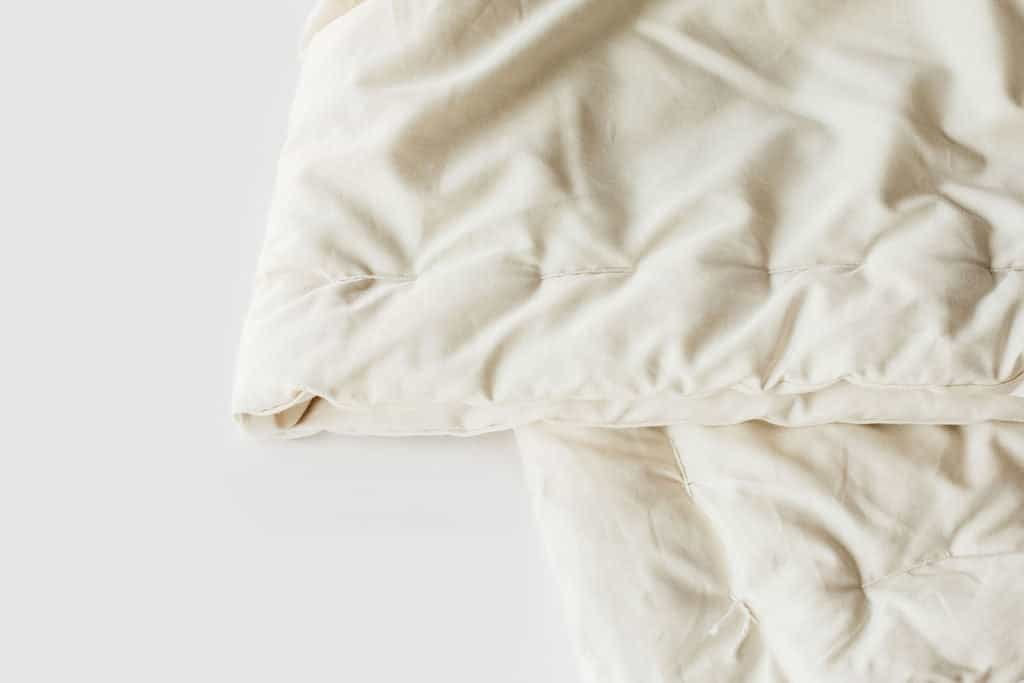
Quilting is more than decoration. Stitched channels or other compartments help limit movement of the fill, although they can create distinct zones in the surface feel. A pattern with smaller compartments may keep fibers more evenly distributed; a design with broader channels may feel less segmented. Neither approach is universally better. Consider the construction alongside the topper’s thickness and intended level of cushioning.
Cover fabric matters as much as the filling
The cover is the first textile you will feel through a fitted sheet and an important part of the topper’s durability. Cotton is a common choice because it is breathable, familiar against the skin, and available in a range of weaves. A closely woven cotton cover can help contain the fill, while the weave and finish influence whether the surface feels crisp, smooth, or softly brushed.
Check whether the cover is removable. A zippered cover can make surface cleaning or inspection more convenient, but it does not mean the wool fill itself can be washed. In other designs, the cover and fill are quilted together, making the topper a single piece. Ask whether the fabric is organic or conventionally produced if that distinction matters to you, and look for specific information rather than relying on broad terms such as “natural” or “clean.”
Construction details deserve a glance. Strong edging, secure quilting, and well-finished seams help contain the fill and withstand routine handling. Corner straps or elastic bands may be useful if the topper tends to slide on your mattress. Their presence is not essential for every bed, but a secure fit can make everyday use more pleasant.
Temperature regulation without the promises
Wool is often chosen by people looking for a bed that feels less stuffy or damp. Its structure can absorb moisture vapor without immediately feeling wet, and the fiber can help buffer fluctuations in warmth. Those properties may support comfort across changing conditions, but they should not be confused with a guarantee that a wool mattress topper will keep every sleeper cool.
Sleep temperature is personal. A person who sleeps warm under a thick synthetic duvet may still feel overheated after adding any insulating layer, while someone in a cool room may appreciate wool’s warmth. The topper’s fill weight, the mattress beneath it, bedding above it, and the room’s ventilation all influence the final result. When temperature is a concern, consider whether you can adjust the other layers seasonally.
Pay attention to the cover and the sheet you plan to use. A dense or heavily finished cover, combined with a tightly woven sheet and a substantial comforter, can create a different experience from a lighter, more breathable ensemble. The most useful approach is to assess the whole bed rather than treating one material as a complete solution.
Sourcing, certifications, and responsible questions
Wool sourcing can be complex, so useful product information should be specific. Look for the country or region where the wool was raised, where it was processed, and where the topper was assembled. These are separate stages and may take place in different places. Traceability information can help you understand the supply chain, while a named certification can provide a framework for evaluating particular environmental or processing criteria.
Organic certification applies to defined standards and supply-chain requirements; it is not a universal measure of comfort, durability, or overall environmental impact. If a product claims certification, check which component is certified—the wool, the cotton cover, or the finished item—and whether the certification is current and relevant to the claim. A clearly described material composition is more useful than a vague sustainability statement.
It is also reasonable to ask how animal welfare is addressed, how the wool is cleaned and processed, and whether dyes or treatments are used. A transparent maker should be able to explain the materials and provide care guidance. You do not need to become a textile specialist to make a considered choice; a concise, verifiable answer is often enough to distinguish meaningful sourcing information from marketing language.
Care is part of the buying decision
Wool toppers do not all have the same care requirements. Some are intended to be aired regularly and spot-cleaned only. Others may have removable covers or specific professional-cleaning instructions. Machine washing is not automatically appropriate: agitation, excess heat, or improper drying can cause wool fibers to felt, shrink, or clump. Always follow the care label and the maker’s guidance for the exact product.
A washable cover or mattress protector can reduce the need to clean the topper itself. Choose layers that fit securely and do not compromise the topper’s intended feel. Airing the bedding in a dry, well-ventilated space may help refresh it, but avoid prolonged exposure to intense direct sunlight or heat unless the manufacturer specifically recommends it. Moisture should be allowed to escape fully before the topper is covered or stored.
For a spill, act promptly but gently. Blot rather than rub, use only the cleaning method approved for the product, and avoid saturating the fill. If a stain reaches the wool or the care instructions are unclear, contact the maker before attempting a more intensive treatment. When storing a topper, follow the instructions about folding or rolling, keep it clean and completely dry, and use a breathable storage solution unless the manufacturer specifies otherwise.
Care should feel manageable in ordinary life. If a topper requires specialist cleaning that is inconvenient for your household, or if the care instructions are unusually restrictive, account for that before buying. A product’s long-term comfort depends partly on whether its maintenance fits the way you actually live.
Common questions about wool mattress toppers
Will a wool topper make a firm mattress feel soft?
It can add a cushioned layer, but the effect depends on fill weight, thickness, quilting, and the condition of the mattress. A thin topper may make only a subtle difference. A topper cannot reliably repair a mattress that has lost support or developed deep indentations.
Is wool a good choice for someone who sleeps hot?
Wool’s moisture-management properties appeal to many people who want a less clammy sleep surface. However, warmth is affected by the entire bed and by individual needs. Compare fill and cover details, and consider the comforter, sheets, and room temperature as part of the decision.
Can a wool mattress topper be washed?
Some can be cleaned in limited ways, but many require spot cleaning and airing rather than routine washing. Care varies by construction and processing, so never assume that a wool product is machine-washable. Follow the specific care label.
How long will a wool topper last?
There is no single lifespan that applies to every topper. Fiber quality, fill density, construction, use, and maintenance all matter. Review the warranty, ask how the fill may settle, and follow the maker’s recommendations for airing, cleaning, and storage.
A thoughtful checklist before you choose
Before settling on a wool mattress topper, take a moment to compare the details that are easiest to overlook in a product description. The following checklist keeps the decision grounded in how the topper will function in your own bedroom:
- Does the mattress need a little surface cushioning, or is it worn out and in need of replacement?
- Are the topper’s dimensions compatible with your mattress and fitted sheet?
- Are thickness, fill weight, and construction described clearly enough to compare?
- What material is used for the cover, and is it removable or quilted to the fill?
- Are the wool’s origin, processing, and any certifications explained precisely?
- Does the care guidance suit your household, including cleaning and storage?
- Is there a warranty, and does it explain how settling or wear is handled?
The best wool mattress topper is not necessarily the thickest, the most heavily marketed, or the one with the longest list of claims. It is the one whose fill, surface, construction, and upkeep make sense for your mattress and your preferences. Wool can bring a tactile, breathable layer to the bed, but thoughtful selection begins with realistic expectations and ends with care suited to the material.
When the details are clear, the choice becomes less about chasing an idealized promise of perfect sleep and more about creating a bed that feels right night after night: quietly comfortable, thoughtfully layered, and built around the way you rest.